The debate over HIIT vs steady-state cardio is one of the most hotly contested topics in the fitness world. Both forms of exercise have passionate advocates, but which cardio burns more fat? The answer is more nuanced than most fitness content suggests — and understanding the science will help you choose the best cardio for weight loss based on your specific goals, fitness level, and lifestyle.
What Is HIIT? (High-Intensity Interval Training)
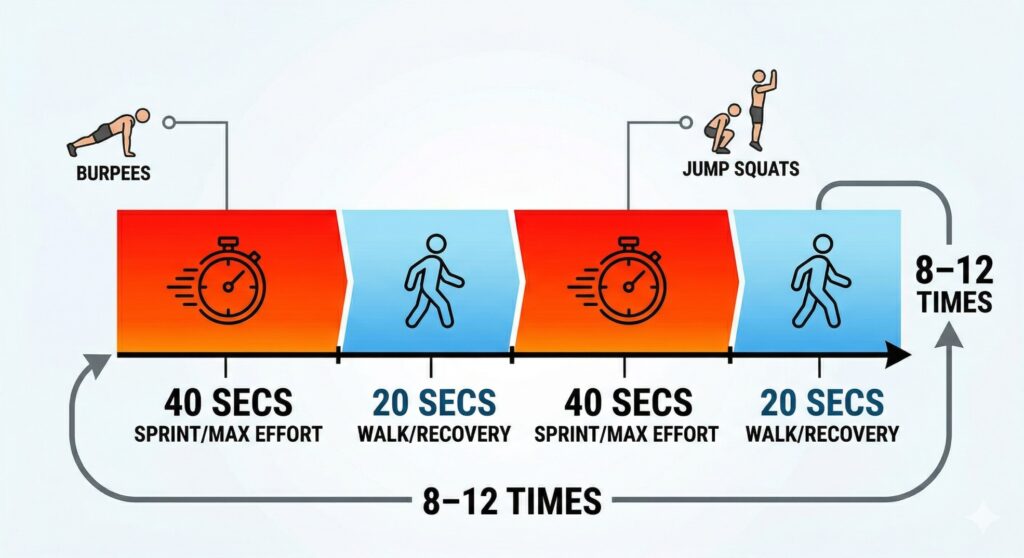
HIIT workout for fat loss involves alternating between periods of maximum effort exercise and brief recovery periods. A classic HIIT structure might be 40 seconds of sprinting followed by 20 seconds of walking, repeated 8–12 times. Total session time is typically 20–30 minutes. The intensity is the key — during work intervals, you should be operating at 85–95% of your maximum heart rate. HIIT training benefits include time efficiency, high calorie burn, and a significant post-exercise metabolic boost.
What Is Steady-State Cardio?

Steady-state cardio (also called LISS — Low Intensity Steady State) involves maintaining a consistent, moderate intensity for 30–60 minutes or longer. Examples include jogging at a comfortable pace, cycling at 65–70% max heart rate, or swimming laps. Your heart rate stays in the “fat burning zone” (60–70% of max HR), and you can maintain a conversation. Steady-state cardio benefits include low injury risk, ease of recovery, and strong cardiovascular health improvements.
HIIT vs Steady-State Cardio: Calorie Burn Comparison
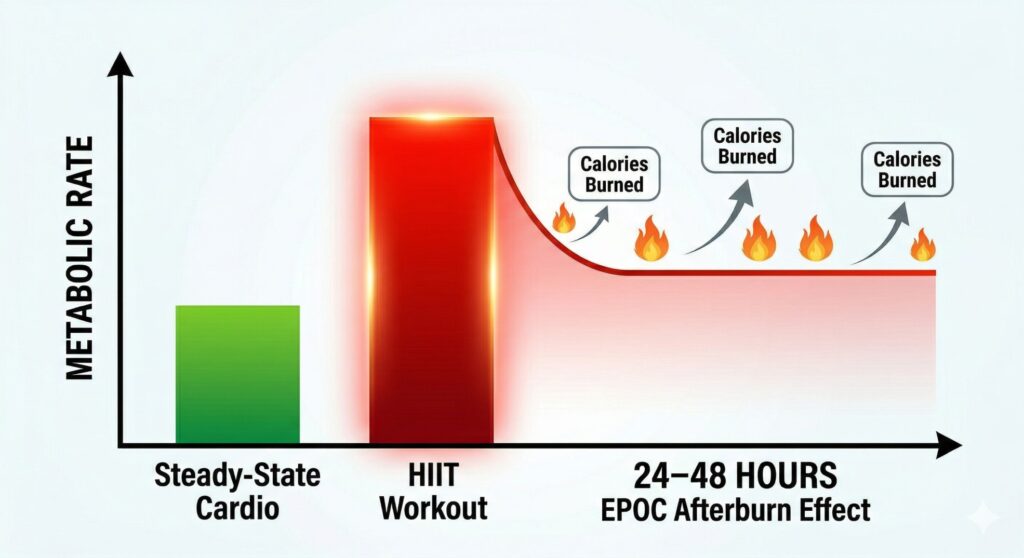
In a 30-minute session, a 155 lb person burns approximately 300–400 calories doing HIIT cardio, compared to 200–270 calories doing steady-state jogging. However, HIIT’s true advantage for fat loss comes from EPOC (Excess Post-Exercise Oxygen Consumption) — commonly called the “afterburn effect.” After a HIIT workout for fat loss, your metabolism remains elevated for 24–48 hours, burning an additional 100–200 calories. Steady-state cardio produces minimal EPOC. Over a week, HIIT can result in 400–600 more calories burned despite shorter session times.
🔬 Research Findings
A 2017 meta-analysis in the British Journal of Sports Medicine found that HIIT reduced body fat by 28% more than moderate-intensity continuous training over the same time period. However, steady-state cardio was superior for improving cardiovascular endurance in sedentary individuals.
HIIT Benefits for Fat Loss: Why It Works
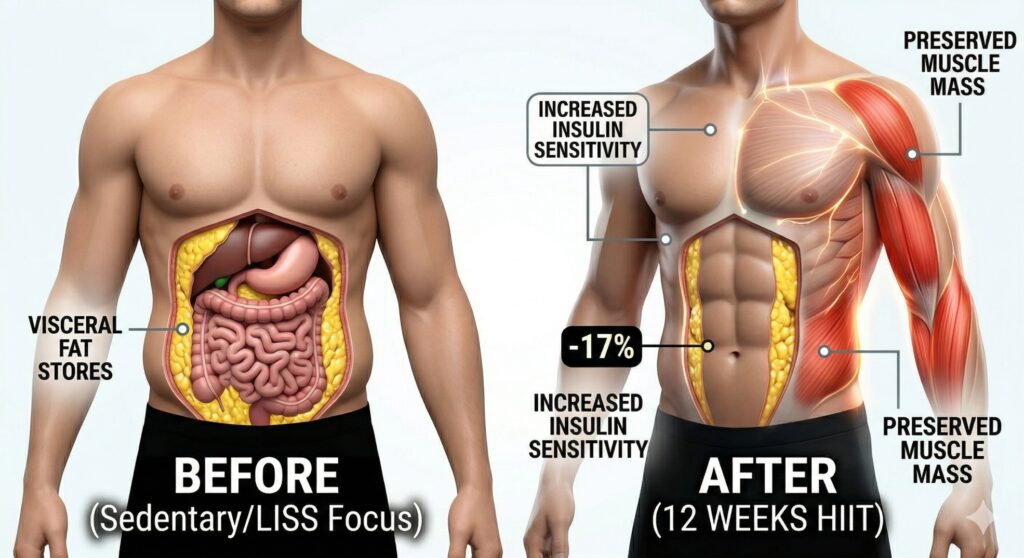
The HIIT training benefits for fat loss are extensive. HIIT increases metabolic rate for up to 48 hours post-session (EPOC). It significantly reduces visceral abdominal fat — a 2012 study found 17% reduction in visceral fat with 12 weeks of HIIT. HIIT increases insulin sensitivity, helping your body utilize carbohydrates for energy instead of storing them as fat. It also preserves muscle mass during a calorie deficit far better than steady-state cardio. For time-pressed individuals wanting to burn fat quickly, HIIT is the superior cardio method.
Steady-State Cardio Benefits: Why It Still Has a Place
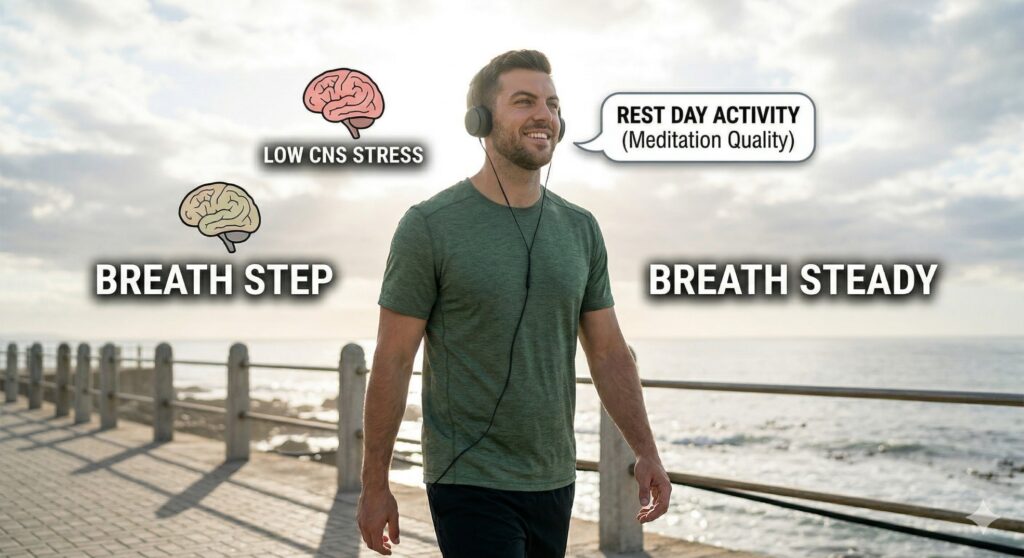
Despite HIIT’s metabolic advantages, steady-state cardio benefits are significant and should not be dismissed. LISS is far less taxing on the central nervous system and muscles, meaning it can be performed on rest days without hindering strength training recovery. It’s accessible for beginners, elderly individuals, and those with joint issues. Long-duration steady-state cardio (45–60 min) burns a substantial number of calories while being genuinely enjoyable — many people prefer long walks, hikes, or bike rides for their meditative quality. For general health, stress reduction, and heart health, steady-state cardio is excellent.
Which Cardio Burns More Fat Long-Term?
When evaluating which cardio burns more fat over months or years, adherence becomes the most critical factor. The best cardio for weight loss is the one you actually do consistently. HIIT’s intensity means many people don’t enjoy it and skip sessions. Steady-state cardio is more sustainable for many individuals. From a pure calorie-math perspective over 12 weeks, a person doing HIIT 3x/week will burn more total fat than someone doing LISS 3x/week — but only if both are performed consistently.
The Optimal Cardio Strategy: Combine Both
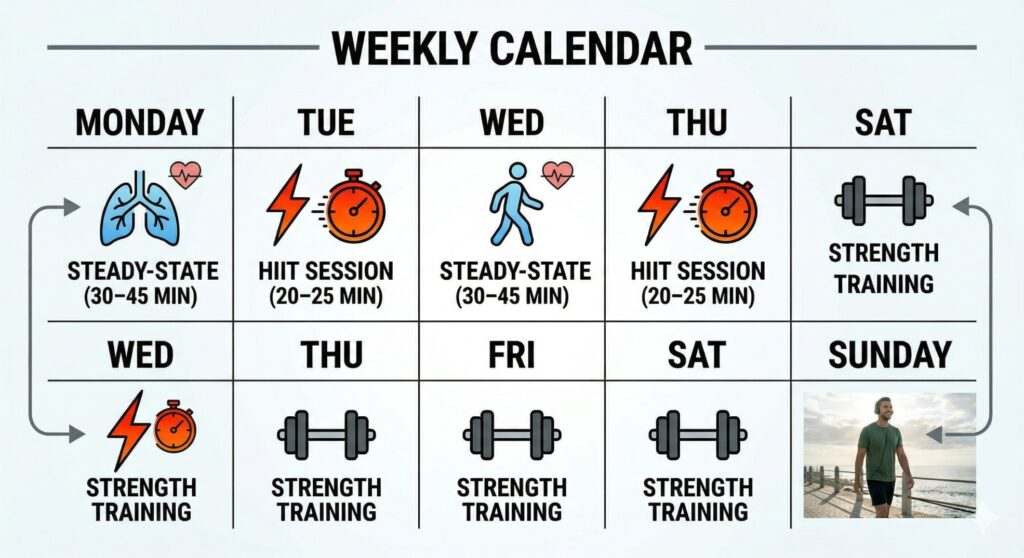
The most effective fat loss approach doesn’t pit HIIT vs steady-state cardio against each other — it strategically combines both. Research suggests the following optimal weekly cardio structure for fat loss while preserving muscle: 2 sessions of HIIT (20–25 minutes each) and 2 sessions of steady-state cardio (30–45 minutes each). This delivers the metabolic benefits of HIIT while providing enough low-intensity activity for additional calorie burning without excessive CNS fatigue.
HIIT vs Steady-State Cardio: Who Should Choose What?
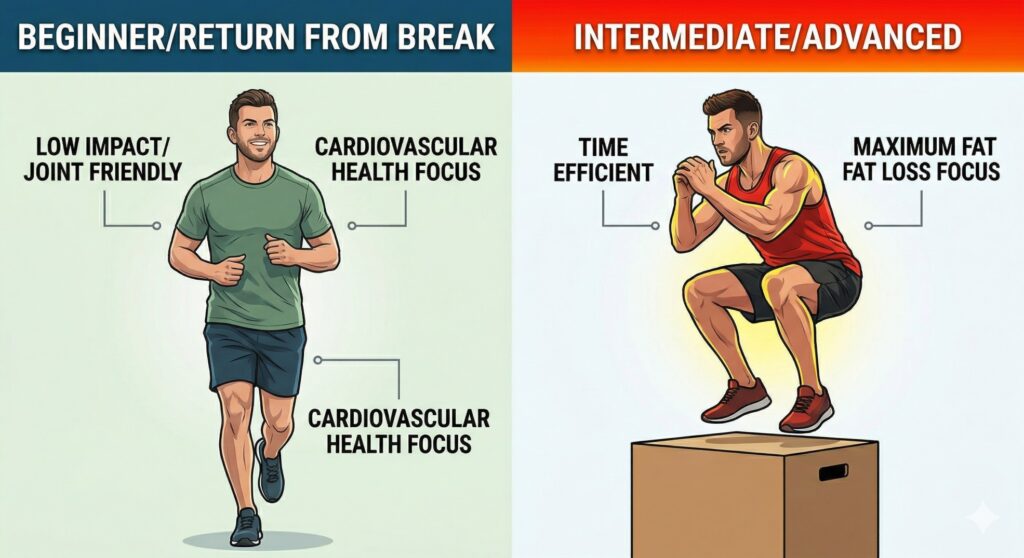
Choose HIIT workouts for fat loss if you are intermediate-to-advanced fitness level, time-limited, want maximum fat loss in minimum time, enjoy intense, varied training, and have healthy joints. Choose steady-state cardio if you are a beginner or returning after a long break, have knee or hip joint issues, want to train every day without overtraining, prefer long outdoor activities, or are primarily focused on cardiovascular health rather than physique goals.
Sample HIIT Workout for Fat Loss (20 Minutes)
- Warm-up: 3 minutes light jogging
- Round 1–8: 40 sec burpees / 20 sec rest
- Round 1–8: 40 sec jump squats / 20 sec rest
- Cool-down: 3 minutes walking + stretching
🏆 The Verdict
HIIT burns more fat per minute and produces superior metabolic adaptations for fat loss. Steady-state cardio is more accessible, joint-friendly, and sustainable. The optimal approach for most people is 2 HIIT + 2 LISS sessions per week, paired with strength training, for maximum fat loss results.